
Anupriya Nagar's Success Story: From 21-Year-Old London Student to Successful Producer.
September 19, 2026
September 19, 2026,3:03:49 PM

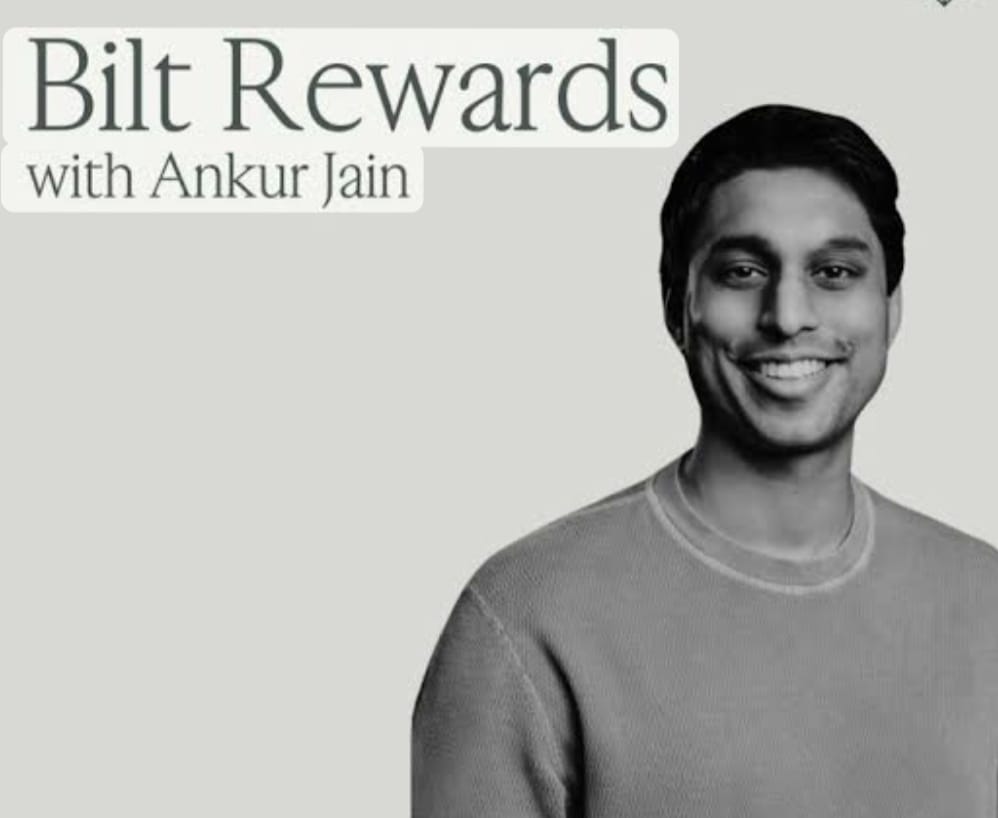
Bilt Rewards is a loyalty program that lets users earn points on rent and mortgage payments without transaction fees, along with everyday spending and travel.
Earning Points Members earn 1x points on rent (up to 100,000 points per year) and other purchases, with bonuses like 3x on dining or groceries (up to $25,000 annually), 2x on travel, and double points on "Rent Day" (the 1st of each month). Points also come from linked cards for fitness, Lyft rides, or dining via the Bilt app.

Credit CardsBilt offers cards like Blue (no annual fee), Obsidian, and Palladium (with welcome bonuses such as $100–$300 in Bilt Cash or 50,000 points after spending requirements). New 2026 cards introduced a dual-currency system with Bilt Points and Bilt Cash (e.g., 4% back option on some spend).
Redemption Options: Redeem for travel transfers to partners (1:1 ratio at higher elite tiers), future rent credits, fitness classes, or neighbourhood perks like dining discounts. Bilt Cash provides flexible credits, such as $120/year for delivery or hotel stays. Elite Status Tiers: Palladium card offers a fast track to Gold. The program is accessible via iOS/Android apps for rent reporting and local benefits.
Ankur Jain founded Bilt Rewards in 2019 and serves as its CEO. Background: A serial entrepreneur born around 1990, Jain previously founded Kairos (a venture studio), Humin (acquired and leading to his VP Product role at Tinder), and was involved with Rhino. He launched Bilt to create a loyalty program for renters, inspired by profitable models in airlines and hotels, as shared in talks with figures like Barry Sternlicht.
Company Growth
Under Jain, Bilt hit a $3.1 billion valuation by 2024 after $200M funding, rising to $10.75B by mid-2025 via rounds led by General Catalyst (with Ken Chenault as board chair) and GID ($250M). Forbes pegged his net worth at $3.4B in August 2025; backers include the NFL's Roger Goodell on the board.
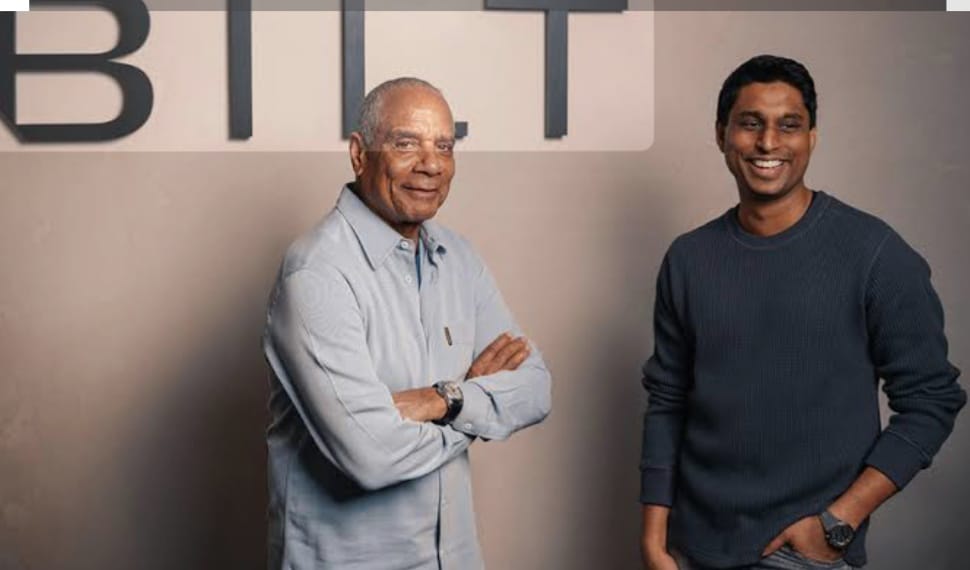
Ankur Jain built his entrepreneurial career before Bilt Rewards through key ventures in tech and investing.
Early Ventures. In 2008, he founded Kairos Society (later evolving into a venture studio), an incubator for young entrepreneurs tackling issues like healthcare and housing; its portfolio companies raised over $600 million by 2017, reaching $6.5 billion+ in value, and it partnered with Obama's Startup America.
Humin and TinderJain launched Humin in 2012, a San Francisco-based address book app using contextual cues for contacts; he raised $15 million before Tinder acquired it in 2016, after which he became VP (later CPO) of Product at Tinder, credited with features like Tinder Select. Pre-Bilt Investments, returning to Kairos in 2017 as founder/CEO, he launched Rhino (replacing security deposits with fees) and partnered with UK startup Cera for elderly home care; Bilt was incubated there. He also held roles like Managing Partner at Emergent Ventures VC, Co-founder of VAMA, Inc., and VP at Nexus Venture Partners.

Bilt Rewards lets users earn points on rent payments without fees, everyday spending, and targeted categories like dining and travel, redeemable for travel, fitness, or future rent credits.
Earning Points: Pay rent via the Bilt app (up to 100,000 points/year at 1x base, boosted to 1.25x if non-housing spend is 100%+ of rent); Bilt sends payment to your landlord, and you reimburse fee-free. Earn 3x on dining/groceries (up to $25K/year), 2x on travel, 1x elsewhere; doubles to 6x/4x/2x on "Rent Day" (1st of month, up to 10K bonus points, excluding rent)—requires 5 transactions per statement.

Cards and Tiers: Three main cards: Bilt Blue (no fee), Obsidian, Palladium (welcome bonuses like $100–$300 Bilt Cash or 50K points). Tiers (Blue to Platinum) unlock via points/spend for perks like 1:1 transfers to airlines/hotels and elite bonuses. Redemption points transfer to partners (e.g., United, Hyatt), cover rent/fitness/Lyft, or convert to Bilt Cash for delivery/hotels (e.g., $120/year GrubHub). New 2026 dual-currency adds 4% Bilt Cash option on spend.
Bilt Rewards generates revenue through multiple streams tied to its loyalty program, payment processing, and partnerships. Key Revenue Sources: Interchange Fees: Earns 1.5-2.7% plus fixed fees from merchants on non-rent transactions via Bilt Mastercard; absorbs costs for rent but profits from dining, travel, and everyday spend.
Partnership and Referral Fees: Bilt Alliance with property managers (70% of top 100) yields referrals when users lease properties; shares savings from reduced vacancies and incentives (e.g., $30B annual lease marketing spend). Merchant Commissions: 1.5-2% on neighbourhood sales (projected $10B annually by end-2026) via app-driven local perks like dining and events.
Additional Streams: Interest on card balances, Wells Fargo subsidies (0.8% on rent volume + $200 per signup), and data insights for underwriting/partners boost margins. Projected to exceed $1B revenue by Q1 2026 amid $100B housing spend processing.
Bilt Rewards is projected to surpass $1 billion in annual revenue by Q1 2026, up from $500 million in 2025 and $300 million in 2024.Growth Drivers: The company processes over $100 billion in annual housing spend (rent and mortgages) by end-2026, earning 0.6-0.9% transaction fees from landlords and property managers covering $36 billion in rentals across 70% of top multifamily owners.

Additional revenue comes from merchant commissions on $10 billion in neighbourhood spend, interchange fees, and tools for resident engagement/lease renewals.
Valuation Context: A $250 million funding round in early 2026 valued Bilt at $10.75 billion, reflecting its expansion into a loyalty ecosystem with 40,000+ merchants and partnerships in one in four U.S. apartment buildings. Earlier estimates pegged 2024 revenue lower at around $52 million, but growth accelerated rapidly.
Bilt Rewards' valuation stands at $10.75 billion as of its latest funding round in July 2025.
Valuation History:
Grew from $3.1 billion (early 2025 after $200M raise) to $3.25 billion (August 2024 $150M) and then tripled to $10.75-10.8 billion via a $250M round led by General Catalyst and GID, with United Wholesale Mortgage investing $100M.No newer public valuation reported by February 2026; projections tie growth to $1B+ revenue from $100B housing payments processed.

Ankur Jain's net worth is estimated at $3.4 billion as of August 2025.
Basis of Wealth: This figure stems primarily from his approximately 36% ownership stake in Bilt Rewards, valued at $10.75–$10.8 billion following a $250 million funding round in July 2025 led by General Catalyst and GID. Earlier estimates were lower: $1.2 billion tied to Bilt's $3.1 billion valuation in early 2024.
Updates and Context:
Forbes ranked him 19th among self-made billionaires under 40 globally in early 2026, highlighting his status as the richest Indian-origin entrepreneur in that group amid Bilt's growth to process $100 billion in housing spend. No public updates post-August 2025, adjust for further valuation changes by February 2026.

Ankur Jain's investments outside Bilt Rewards centre on early-stage tech via his venture studio Kairos and related funds. Key Ventures LaunchedThrough Kairos (founded 2008, now valued at $6.5B+ portfolio), he incubated Rhino (security deposit alternative, where he is co-founder/chairman) and partnered with Cera (UK elderly home care).
Kairos has backed over $6.5B in companies addressing housing, healthcare, and education since partnering with Obama's Startup America.Angel and VC Investments. As an angel, Jain has invested in AI/ML startups like Skit.Ai and Shadez (painting solutions), focusing on manufacturing, software, and business services. Past VC roles at Nexus Venture Partners, Blumberg Capital, and Emergent Ventures (as managing partner) included Observe.ai, Talview, Braze, and acquisitions like Minjar (Nutanix) and Cyvera (Palo Alto).

September 18, 2026
Icons of Indian Business: Icons of Indian Business is a monthly business magazine targeted at Indian business owners, traders and entrepreneurial enthusiasts. It provides online media solutions for Entrepreneurs. IIB has been the definite guide to the diverse challenges of entrepreneurship. Each edition consists of entrepreneurs ... with the all information they require and demand to grow their business. Iconsindianbusiness.com offers a daily source of information, strategic insights and how-to guidance on virtually every area of business management, from leadership to marketing, technology and money matters. IIB connects with millions of business owners who drives forward with the ideas and innovations.Make your brand the preferred choice with these affluent business decision-makers through a variety of customized programs integrated across digital,print,event and community platforms. IIB team works from Bangalore,Karnataka, but has a presence throughout India through its correspondents. IIB published 12 times a year, available in print and digital editions.
© 2024 Iconsofindianbusiness.com. All Right Reserved.